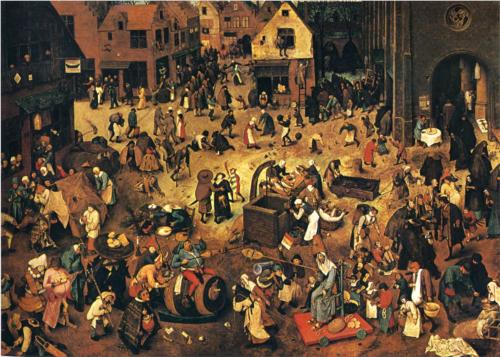
Yesterday in Germany was Rosenmontag. Today, elsewhere in the areas of old-e world-e Christianity, is Pancake Day, aka Shrove Tuesday.  It’s your last chance to use up all that forbidden fat-for-cooking before Lent.

2013 02 Feb 11 Bruegel fight-between-carnival-and-lent-1559.jpg!Blog

Helau!

(pronounced, more or less, to ears tuned to English, as “hello”)

Helau! is the salute heard throughout Rosenmontag parades in the Catholic areas of Germany on the Monday before the beginning of Lent on Ash Wednesday. That would be today. In the U.S., Rosenmontag’s counterpart is Mardi Gras, but Mardi Gras doesn’t have the reputation of the weeks of parties beforehand organized by the Fasching prince and princess, the planning for which begins on the 11th of November – the 11th minute of the 11th day of the 11th month, to be precise.  Fasching’s ‘crazy season’ antics have the same caveat as crazy behavior in Las Vegas,

Rosenmontag is not an official holiday, but is celebrated as if it were. Schools are closed, companies give employees the day off, and the parades are shown on television. A big difference between American celebrations and those in Germany is that the celebrating happens in towns large and small and isn’t centralized. Instead of watching Beyonce and her crew, or the current pop gods and goddesses, townspeople watch local talent. Everybody joins in.

Like Mardi Gras, Rosenmontag is a reason to party. From Christmas/Solstice through New Year, the various incarnations of Groundhog day, the Lunar (Chinese) New Year and on through to St. Patrick’s day, enthusiasm for winter parties is high. Fasching and Rosenmontag may have stemmed from the gloom of northern hemisphere winters and the need to find something to do when working in the fields wasn’t easy, or useful.

Non-Catholic Americans may have already substituted Superbowl parties for winter religious celebrations from centuries past. Tuning out crappy weather by having a party, before cabin fever threatens the happiest of couples, seems to be common enough to almost be a subject worth scientific scrutiny – and wouldn’t a mad scientist make an unusual Fasching party costume.

If you’ve ever daydreamed about visiting Germany, a trip during Fasching — the “fifth season” — is off-season for travel, and hotels won’t be as crowded as during the summer months, or during that big party in one city in early October.

What happens on Rosenmontag, stays on Rosenmontag so you’re allowed to get crazy. And if you can’t afford to travel, click and enjoy.

My mid-movie review of Zero Dark Thirty, scribbled in the dark on a bit of cardstock that backed some checks in my purse, was short: “intense, grim, dystopic” and  “not as tense as Argo.”  The film is, of course, fiction, but we all know about extraordinary rendition, interrogation and attacks by terrorists.  The modern world is messy and this was brought home to an American audience by this well-filmed movie: we are targets, and, we’ll do what we can to retaliate.

Despite my amateur awareness of the techniques required to artificially render a scene as realistically as possible, whatever techniques used by the director seemed to be invisible while I was immersed in the story.  I don’t remember seeing any of the dramatic ‘circling’ by the camera (a technique that leaves me dizzy) and little of other obvious filming styles that telegraph to a viewer that ‘you’re not really there.’  Much of this film appeared to be from a fly-on-the-wall viewpoint minus the static unblinking stare of a surveillance camera, and the viewer couldn’t easily hide from the knowledge that ‘something like this really happened.’  Those helicopters took a long time to get where they were going.

Although the film wasn’t as tense as Argo, it replaced Argo’s tightly wound suspense with an  uneasy sad weight, the weight that for a portion of the world’s population Americans aren’t the flavor of the month.  We want so much to be liked, but some people just can’t see our homespun goodness. Adding to the weight is that the people employed to minimize the danger for us can’t always play a civilized game of either keeping our information secret by simple means, or finding out what other people don’t want us to know merely by eavesdropping or reading the mail of those other people.  The movie is a graphic reminder of what George Orwell’s “rough men” do on our behalf to other rough men, and sometimes to those who have yet to do anything to us.  Too bad it’s a cycle not easily broken, if, indeed, it can be.

Trivia about the movie is at IMBd.

Apropos of nothing more than needing a subject about which to write, the dilemma of where I’m from came to mind. Not having a well-defined place of origin is one of those small social inconveniences like having eyes of two different colors, a haircut for the wrong gender (too long or too short), or very out of date eyeglasses frames. None of it matters, but people find a way to comment on it anyhow.

I have a slight, non-standard American accent. No matter where I live I don’t sound like I’m “from around here.” Of course, people understand me but some vowels are “off,” or I’ll use a word in a wrong way. If, after a few moments of talk, the people I’m speaking with have any curiosity about it, I’m asked where I’m from, and I hesitate. It seems like an easy enough question to answer. After all, how can you not know where you’re from?

If I’m being a nosy parker, most people to whom I’ve posed the same question will usually say where they were born, or where they grew up. They know where home is. Maybe they moved around the area, perhaps from house to house in the same town, so they know the local roads, the television stations, the sport teams and famous players, the old restaurants and high school hangouts, and not only the weather but the long-time weather forecasters as well. They can say, “I’m from …” without any hesitation.

When I am asked where I’m from, I usually say, “The Air Force.” It often takes my questioner a couple of beats to figure out what I said and my reply usually gets a half-hearted laugh. I should probably just pick one place that I’ve lived before, but then I get asked something specific about it and I hesitate again while explaining how I only lived there a few years a long time ago. Either way, people look at me as if I’m making stuff up.

~~~~~

I was born in a “temporary” WWII-era military hospital on an Air Force base on the east coast of the U.S., and for three months lived in the city of my birth, which wasn’t where either of my parents were from. Just like everyone else I’ve carried my birthplace identifier with me as long as I can remember, carefully writing it on any form demanding the information, but not having any feeling for what it was like there other than what I’ve seen in the few photos in our album from those three months, or from impressions given by newspaper pictures (it’s a famous city). I often feel like a fraud by claiming I’m a native daughter because my knowledge of the place is that of a person who has read a tourist brochure. I can describe famous landmarks but that’s about the extent of my knowledge. I know more about Paris, the one in France, than I do about where I was born. It’s a trait I share with all my children, none of whom remember where they spent the earliest days of their babyhoods.

While I was still a babe in arms, my dad sailed away on a Navy ship to England after traveling with me and Mom to St. Louis so she and I could stay with my godparents, my dad’s brother and his wife. We have pictures of my cousins playing with me, but it’s like looking at old photos of them playing with a neighbor’s baby.

A quarter of the way around the world, Dad settled in to postwar-London and after four months found a house to rent. Once my father had a place for us to stay, the Air Force allowed Mom and me to board a Navy ship to sail to Europe with a boatload of other dependents, including a family who would live down the street from us a decade or so later, but who, at the time, were just names on the ship’s manifest and of no more importance to us than the rest of the dependents trekking to other countries to be reunited with husbands and fathers who’d also managed to find apartments, houses or quarters.

1951 04 Apr dependents arriving in Europe

A few years after sailing to England, my parents and I sailed back to the U.S., with my dad stuck again in the hold of yet one more old Navy ship, while Mom and I were in a small cabin. Fed up with being shipped in steerage merely because he was enlisted and not an officer, Dad laid down good money for first class tickets on a train to St. Louis. There he bought a light green Chrysler station wagon and we drove the rest of the way to South Dakota where I spent my elementary school years. In the natural course of things, I acquired a brother and a sister.

To me, my brother and my sister were actual South Dakotans – they had memories of the place we lived when they were born — but I was from someplace else, a place more foreign to me than some actual foreign places. Reducing my sense of being from any one place, I couldn’t even claim the country where I’d made my own first memories.

Then we moved again, but this time it was wonderful and I didn’t care where I was from — I’d be from there.

I spent junior high and the beginning of high school in beautifully rainy and sunny Bermuda. It was like a permanent vacation, what with swimming from a friend’s back porch, sailing in St. George’s Harbour and water skiing, but eventually reality reared its head. Even though I wanted to be a minor league diddlybopper on a blue Mobylette from jus’ do’n de rood, b’y, I wasn’t from there. I could be made to leave. When we left England, I didn’t know what it meant to leave home and it was an adventure. This time, I knew, and the adventure wasn’t as exciting.

By that time, the military transport of people had switched to airplanes and these planes eventually took us to the town where I’d graduate from the remainder of high school, but not with any sense of belonging. While working on the senior class float for the homecoming parade, one of my classmates looked at me, cocked her head like a curious dog, and asked, “When did you get here?” By then, I’d been in that school two years. If Dad hadn’t retired, it would be almost time to leave and be the new kid again at another Air Force base.

Despite the wild, blue yonder coloring my entire life, by the time I graduated from school I was a civilian even though I didn’t feel like one. I still addressed adult men by rank and last name, and could sing the Air Force song as well as the songs of the other services. My natural vocabulary included words, phrases and acronyms such as: housing list, quarters, and civil engineers, which all had to do with where we lived, or rather, where we used to live. Getting to our (former) quarters often included front or side gates in the base fence, and the guard shack.

The traditional words about where my dad had worked included SAC and MATS, headquarters, bomb wing and bomb squadron, bivouac, NCOIC, AFSC, and my dad’s service number.

Recreational words, which as the dependent of a retiree I could still use, included service club, base pool and base beach, base library, snack bar, BX, Class Six (for Dad), and the all-important ID card. Grocery shopping was done at the commissary. Eating out meant an outing to the NCO Club. Going on vacation, which had meant furlough or leave, involved signing out and signing in, both of which invariably happened either just after or just before midnight to make the most of traveling time.

Traveling to other places involved TDY (Dad went by himself) or PCS (we went, too) and may have included a B-2 bag. People stayed in places called a VOQ, a BOQ, barracks or a guest house.

Airplane stuff was indicated by flight suit, flight line, prop-job, B-52, KC-135, C-130, C-141, fighter pilots, afterburners, Blue Angels and the Thunderbirds.

Scary things were alerts, sirens, and evacuation. Scarier things were loud booms out of nowhere, chaplains arriving at quarters, and Mount Kit Carson which was someplace in Washington state and the site of a fireball from a plane flying into a mountain.

Still, normal, everyday routine outweighed the scary stuff and my transition to civilian life didn’t last long because I joined the Army. My brother and sister chose the Navy and Air Force. Eventually, I became the wife of a soldier and passed along the legacy of Brathood to my children. I’m not “from” any one place, and neither are they.

I was born one place, lived the longest in another, graduated from school someplace else, and my favorite home was yet a different place.

Where am I from?

The Air Force.
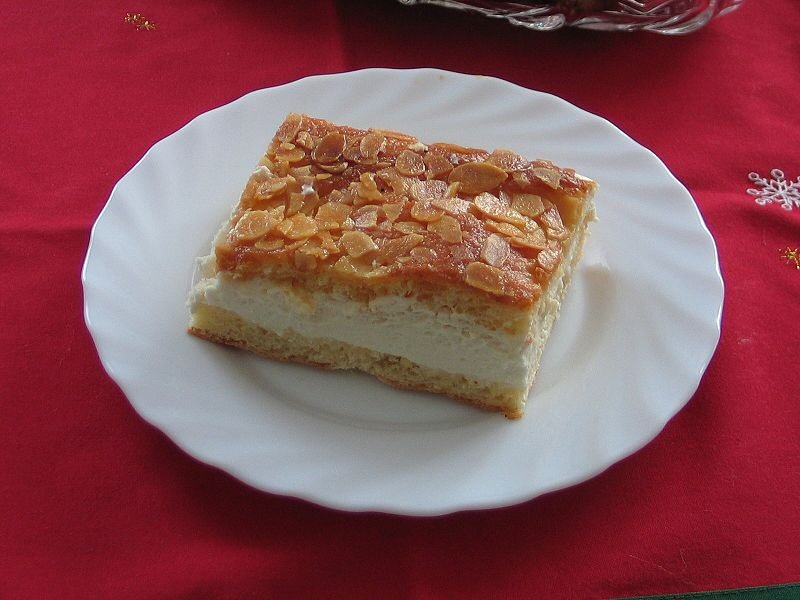
Magic.  E-publishing is magic.

Until about half an hour ago, I had a “Kindle app” only on my Ipod Touch I-gizmo.  For most purposes, reading on the I-gizmo was satisfactory but lately I’ve been buying instructional books and I wanted to make notes.  Using the I-gizmo to read books from which I want to take notes is do-able but the screen keeps turning off while I type (and if there is an off-button for the auto-off function, I haven’t found it).  If I take notes from the books, I also have to flip back and forth between reading the I-gizmo and typing on the computer.  Because of this, I bit the bullet and clicked on the Kindle app for computers.  Actually, I only clicked near the Kindle app button to find out more, but whaddya know, I’d downloaded something.

Seeing that I’d already taken that first step in putting a Kindle app on my laptop, I kept on clicking.  The app-fairies did their bit and, within a minute, all my e-books were neatly lined up awaiting my merest click.

I know that we all take for granted the stuff that we grow up with, which for my generation would be

  • Marilyn Monroe, Rock Hudson and Elizabeth Taylor
  • televisions,  tape recorders and party-line telephones
  • supermarkets, yellow margarine and tv-dinners
  • Snoopy, Dagwood and Alfred E. Newman
  • Disneyland, Mickey Mouse and Donald Duck
  • jet planes, the USSR and bomb shelters
  • Elvis, the Beatles and the Monkees
  • rock & roll, Dick Clark and teenagers (as a population demographic and not just as people older than 12 and younger than 20)

Just as all the above seemed as natural as air to me and my peers (but maybe not our parents), it seems as if the e-reading devices have been around for a long time.  In reality it has only been within the last decade or so that the computer capability explosion has magnificently rocked the amount of stuff — books, music, movies and games — made almost instantly available to customers.  The Kindle e-reader was introduced only in 2007.

I don’t know whether Hermione Granger could have conjured up dead-tree books any faster than my installation of the Kindle app, and if that’s not magic, [insert Harry Potter wand-wave] Publarium computatis!, I don’t know what is.

Breakfast again on the road (well, in the hotel prior to getting back on the road after Bouchercon) and I have to wonder why toast is not an integral component of egg breakfasts. Nut bread is the standard accompaniment at this hotel.

I’m used to the Americans not providing milk with tea (coffee creamer with tea is gross) and plunking down lemon wedges and honey, willy nilly, but no place we’ve eaten automatically offers toast to go with eggs. This makes me wonder if we’re the weird ones for expecting toast or if “it’s them“?

Do you expect toast with eggs?

I am developing an abiding hatred for invisible toggle keys on the keyboard. The program you’re using may tell you to “press X to use the keyboard shortcut to do Y” but it doesn’t tell you the “shortcut” of the key that turns that toggle key on and off.

I was happily using “insert” to create a new text box, all according to the drop-down box’s recommendation for the keyboard shortcut. An hour after I started work, all of a sudden the insert key will only make a zero (since the insert key is also the zero key in the number pad). I don’t remember striking the num lock button, but yeah, pushing it fixed the problem. Still, it was an interruption, an irritant and and an imposition.

I am so tired of the pile of learning curves between programs, between gizmos, and between iterations of gizmos. It’s like an hourly ‘learning of toilets’ on a European road trip: “how do you flush THIS one?!?!”

Okay, rant over, blood pressure returning to normal, time to get back to work.

(I’m enjoying alone time with the last of my tea from my room-service breakfast so I can finish a highly-useful course by Kris Neri that started before I left home and ends this coming week. I’m going to buy the CDs of the Bouchercon panels I’m missing — many thanks to the Bouchercon team posting pictures on Facebook to remind me.)

Just returned from walking around the Bouchercon convention area at the Cleveland Renaissance hotel.  I’m familiarizing myself with the hotel so that when the CROWDS are flowing and I’m drifting along between two (invariably) 6’5″ fellows who know where they’re going and we’re not there yet, I don’t wind up in Toledo.

I had a good time today with Nancy Pickard from my home Sisters in Crime group (Kansas) and about forty new friends.  Nancy taught a seminar, SinC into Great Writing, and many of us later agreed that we were happily surprised at the number of hints, tips and techniques she generously shared.

The icing on my cake was having my name drawn to win Nancy’s book, The Scent of Rain and Lightning.  She autographed it, too.

I must also thank my husband for doing my convention registration while I was listening to Nancy.  So far, I’m win-win at Bouchercon, and it doesn’t even officially begin until tomorrow.

I found a new open source program I’m enjoying — FreeMind.  It makes thinking fun, and you don’t hit the edge of the paper.

The image is a 25% screenshot of an unfinished bubble map (this one’s of a bad guy).  For me, the various events that drive him on his way are easier to keep track of on this map than with an outline, a notebook, or index cards on a corkboard.  It goes so quickly that I almost feel lazy using it until I remember that I’ve put more up here than I’ve managed in other brainstorming styles.

The program is easy enough to learn so that you don’t feel as if you’re undertaking a steep learning curve in addition to thinking up whatever it is you want to map.  Thank you to the developers, debuggers and distributors.